
What is an HDRI? 360° EXR explained
Updated
An HDRI is a 360° picture of a place that remembers how bright everything really was. Load it into Blender, Unreal or Nuke and it lights your 3D scene with the real light of that place, with matching reflections.
High dynamic range, in plain words
A normal photo stores brightness from black to white, and anything brighter is cut off. A real room can be thousands of times brighter at the lamp than in the corner behind the sofa. An HDRI keeps that whole range as floating-point numbers, so a light source stays a light source.
360°, as one flat image
The whole sphere around the camera is unwrapped into a 2:1 rectangle called an equirectangular (or lat-long) image. The centre line is the horizon, the top edge is straight up, the bottom edge is straight down.
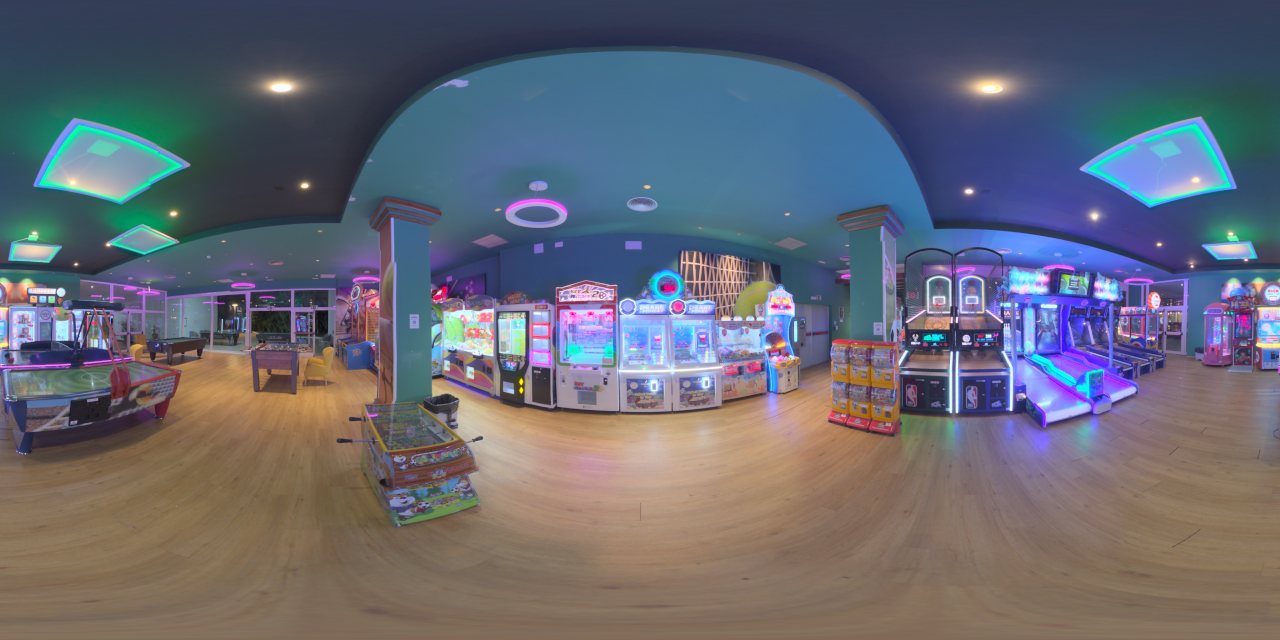
Why 3D artists use them
- Lighting: one file lights the whole scene with believable colour and soft shadows.
- Reflections: chrome, glass and car paint reflect a real place.
- Matching a plate: in VFX, an HDRI shot on set makes CG elements sit in the footage.
How to make your own
You need the full sphere at several exposures from one point. That used to mean a camera, a panoramic head and stitching software (the Poly Haven method), or a mirrored chrome ball. With HDRI Studio an iPhone does it handheld, and here is how that compares to the other options.
Questions
What is an HDRI?
An HDRI (high dynamic range image) used in 3D is a 360° panorama that stores the real brightness of every direction around one point, from deep shadow to light sources, in floating-point values. 3D apps use it to light a scene and to give reflective objects something real to reflect.
What is a 360° EXR?
It is an HDRI saved as an OpenEXR file in equirectangular layout: a 2:1 image where left to right is a full 360° turn and top to bottom runs from straight up to straight down. EXR stores 16- or 32-bit floating-point values, so brightness above white is kept.
EXR or HDR file?
Both hold high dynamic range. Radiance .hdr is an older 8-bit-per-channel shared-exponent format; OpenEXR stores true 16- or 32-bit floats and supports better compression. Most 3D apps read both. HDRI Studio exports 32-bit OpenEXR.
Why not just use a 360° photo?
A normal 360° photo clips everything brighter than white. The light from lamps, windows and the sky is lost, so a 3D scene lit by it looks flat and its shadows are wrong.